Episode 5: Building a Team

Check out Phase 2, my podcast about quitting my job to find more fulfillment in my work life. You can find it on Spotify or Apple Podcasts. Below is a transcript of the latest episode. If you haven’t heard episode 1 you may want to check that out first.

Last episode, I explored my past to find inspiration on what type of work to focus on next and I concluded that trying to build a business might give me the freedom and flexible lifestyle I’m looking for. 

Startup Advice

I’ve read and heard all kinds of advice on entrepreneurship over the years.  I’ve known a handful of people who have started successful companies, from people who boostrapped their own ecommerce businesses over a decade and others who raised a bunch of VC money and had successful exits. 

There seem to be a few fundamental principles I keep hearing. 

The first is to find something that solves a real problem, not something you imagine to be a problem.  Y Combinator is probably the most prominent startup accelerator and investors in the world and they talk about this a lot: their slogan is “Build something people want”.  CEO Michael Seibel strongly urges founders to focus on a problem they personally have so you at least know there’s an actual market rather than an imagined one.  The trick is to find out if the market is bigger than just you.  Also, focusing on your own problem helps founders iterate faster because they can intuitively prioritize what features to focus on and to test whether they are actually solving the problem or not. 

The second principle is to have a concrete plan for acquiring customers and ideally build that into the core product flow in some way.  If you need to pay to acquire customers from the get-go and you have a market of sufficient size, competition will quickly come and make that channel unprofitable.  There are many great dead products that no one knows about because companies couldn’t cut through the noise to find customers. 

I talked to a friend who launched 3 successful consumer apps over the past 10 years.  He has built the ultimate lifestyle company of 2 people, generating tens of thousands of downloads a month with photo and video apps.  He credits 3 main things to their success

  • A high quality product
  • Getting into the Android appstore as one of the most solid options in their category
  • A naturally social product where the purpose is to generate video slideshows for friends on IG, which gives their product instant distribution.  97% of their customers are organic after many years in business which is astounding.

The final principal is to create a Minimum Viable Product as soon as possible to validate your hypothesis and start iterating.  To do that, I’m going to need to build a team.

Like it so far? Subscribe to be notified of future posts

Recruiting Co-founders

My plan with this company is to try and bootstrap the initial prototype to see if we can get traction before seriously considering investors.  I’ve received advice from several people that the longer I can avoid raising money and the more traction I can show in the product, the better my terms are likely to be if I do attempt to find investors.  Doing that is going to require me to convince 1 or 2 engineers to join me as cofounders to help build an initial prototype of the product. 

I started to reach out to former engineers I’ve worked with over the years.  I’m looking for someone who is obviously skilled, trustworthy and most importantly, interested in the area I’m focused on.  This person also needs to have the free time and motivation to work on a sometime on evenings or weekends or is insane enough to quit their day job and join me. 

Its pretty difficult to find someone that meets all these requirements.  Skilled people are in demand already earn a comfortable income.

I did video calls with about 10 former coworkers to pitch them on my project.  With each one, I shared my business plan, customer research and product vision. I find the best way to pitch developers – all of whom have unusually high BS detectors – is to stick to the facts and have a lot of humility about what I don’t know at this stage – which is a lot.  Most of the people I pitched thought the customer problem I’m focused on was a real and significant one, which helped me build confidence.

One of the first people I pitched was my friend Jen who’s an experienced engineering manager that I worked with previously.  She could relate very strongly to the problem, was excited about the product idea and was also interested in doing something different from her day job which she was being increasingly bored with.  She agreed to join the project but planned to keep her day job which means I get maybe 8 hrs a week of her time. 

Jen and I get along well.  We’re both Canadian, she’s very logical, direct and we’re both pretty intense people so when we do something we go all the way.  I was pretty excited to have landed my first partner after only a few weeks. 

A few weeks later, I met with Viktor, who is an engineer I worked with 7 years ago.  When we worked together back then, he was a 20 something digital nomad traveling with his girlfriend while working remotely.  I remember being really impressed with him.  Even though he was inexperienced, he delivered tons of code, was really enthusiastic about learning new stuff and unafraid to jump into any part of the codebase to make things happen, which seems like a good characteristic to have in a startup. 

When I reached out to him over email, he got back to me quickly to say he was interested. Over a Zoom call I learned that he’s now married to that girlfriend and they have a 3 year old daughter.  He works as a freelance engineer, has a flexible schedule and he’s the time for a side project.  He was really excited about the idea and said he’s in too.   

After Viktor signed on I was pretty much on Cloud 9.  Within 3 weeks of starting this project, I had identified a meaningful problem, talked to a dozen potential customers to refine it, figured out a potential solution, recruited two cofounders who had the right tech skills to build it.  I was crushing it!

The next day, I setup a project kickoff to introduce Jen and Viktor to each other.  We talked about our personal goals on the project, key risks, requirements for an MVP and sketched out a rough plan of responsibilities.  We talked about how much time each of us could commit to the project.  I’m in it full time, and we agreed that Jen and Viktor would each dedicated 8-10 hrs per week in evenings and weekends.  We agreed that Viktor would drive the server development and Jen would do app development, while I would work on product strategy, design and growth.  We agreed that before setting up a formalized corporate structure, we needed a trial period of working together so we could get to know each other.   I setup a Slack team room, GitHub and all the latest software tools – we were rolling!

That night I stayed up way too late – I was buzzing with excitement about us getting off the ground.  Browsing Netflix, I stumbled upon a show called Halt and Catch Fire. 

It takes place in Dallas Texas in 1983 – the start of the PC industry.  Its about 3 people who start a company to reverse engineer the IBM PC in the race to build the first laptop.  That was Joe MacMillan, the eccentric and unstable product manager who comes up with the crazy idea and convinces two engineers and investors to join him.  He sells them with a bold vision and salesmanship but throughout the show you can’t tell if he knows what he’s talking about or is just another flimsy hack.  Is the universe trying to tell me something?   

Like it so far? Subscribe to be notified of future posts

A Rocky Start

Within the first few days, Jen quickly started checking code and the app was starting to take shape with visible progress daily. 

However, the backend pieces were going pretty slowly.  Viktor promised the first version of the service by end of the week, which came and went without any updates.  On Monday I checked in on the status and he mentioned it was going to deliver a few days later than expected.  When it was ready on Tuesday, he wasn’t able to deploy because of some permissions issue.  After that was resolved, his delivery wasn’t quite what we were expecting and needed to be reworked.  Then we fell into a pattern: each day, Victor promised things were ‘nearly ready’ but they didn’t end up materializing.  Since he’s based in eastern Europe, we only had an hour or two of overlapping time online which made a miscommunication or missed milestone doubly painful. 

Finally after a couple weeks of failed milestones Jen shared her frustration to me about Victor.  She was concerned about his broken promises and whether he was actually committed to the project.  I assured her that he had delivered results when I worked with him previously and that we needed to give him some time to get settled.  I told her I’d have a talk with him to find out what was going on.

I asked Viktor to do a zoom call with me the next day.  When we met, I asked him how he thought things were going.  He thought they were going fine.  I shared my thoughts: that things weren’t going well, that I was hoping we would be moving faster and that Jen had some concerns about the quality of the deliverables so far.  He was pretty defensive during the conversation and thought it was an unfair assessment.  When we started going to into details about what had gone awry the last few weeks, he agreed it wasn’t ideal.  I asked him if he actually had the time to work on this project – he assured me he did but hadn’t realized the urgency that Jen and I felt.  He also requested that in the future, we should bring up concerns earlier rather than waiting weeks before raising them.  I agreed. 

Another 4 days passed and Viktor was supposed to deliver a significant update to the service.  When it was delivered, it didn’t work as expected.   Viktor was offline and out of communication much of the following day.  Jen and I met up the next day and agreed that this was not working: we needed to make a change

Working in the corporate world, I’ve had to deal with employee performance issues several times, both as a manager and with peers.  Usually, it’s a slow process starts with clear feedback on deliverables, followed by 1:1s, managers and after a period of time to turn things around, a formal HR process.  Evidence is compiled.  Timing is carefully weighed.  This process can take months.

In this company, we don’t have the luxury of months to make a decision.  I have a few months to get this thing off the ground and we need to be kicking ass from the start, not limping along.  I need two partners who are as committed as me and it was clear to me that Viktor wasn’t in that space.  My options were to either have another 1:1 to share feedback and give more time to improve or to cut our losses and move on immediately. 

We made the painful decision to part ways with Viktor after only 3 weeks of working together.  This was difficult for several reasons.  I had brought Viktor into the project, considered him a friend and knew that he the skills to help us be successful.  On the other hand, he wasn’t delivering after 3 weeks, without signs of improvement.  He was starting to frustrate Jen and I couldn’t afford to have her lose motivation in the project.  I didn’t quite understand what was the root cause of the problem, but in some ways it didn’t matter.  I setup a Zoom meeting with him the next day.

I rehersed the conversation before we met.  I wanted to phrase things in a way that was clear but also kept us on positive terms.  I had flashbacks to people I’ve had to let go in the corporate world.  Of course in those cases, I had an HR rep and manager coaching me on what to say and what not to say.  This time, I’m on my own.

When we finally met, his video wasn’t working due to a poor connection, which made it easier I guess – I didn’t actually have to look him in the eye.  I began by thanking him for agreeing to work with us for the past few weeks and for his contributions so far.  But that things aren’t working well as far as delivery of his part and that since I had urgency on this project, I don’t’ think we can work together going forward.  Any software he wrote is his to own and that we will not use any of it going forward. 

He told me he was disappointed but not that surprised with my decision.  He thanked me for the opportunity and to keep him updated on progress.  He made it super easy on me, which, in some ways makes it more painful to end it.  He was a respectful person to the very end, which, I guess is one of the reasons I wanted to work with him in the first place. 

1 month in and shit is getting real. 
Like what you read? Subscribe to be notified of future posts

Episode 4: Finding Meaning

Check out Phase 2, my podcast about quitting my job to find more fulfillment in my work life. You can find it on Spotify or Apple Podcasts. Below is a transcript of episode 4. If you haven’t heard episode 1 you may want to check that out first.

Well, I’m back in Seattle after traveling for 2 1/2 months.  We spent 6 weeks in Minnesota with my wife’s family and 4 weeks on the road where we had memorable adventures exploring the national parks and wildness of the American west with our two young kids.  If you haven’t heard about our trip, I encourage you to checkout the first 3 episodes of the podcast. 

The good thing about being on the road is that I didn’t have to think about what’s next.  As we got closer to home, I started to feel the weight of having to figure out a plan.  I could almost hear the stopwatch ticking, and each tick sounds like a cash register ringing of the money slowly disappearing from savings.

In my first week home I felt pretty aimless. 

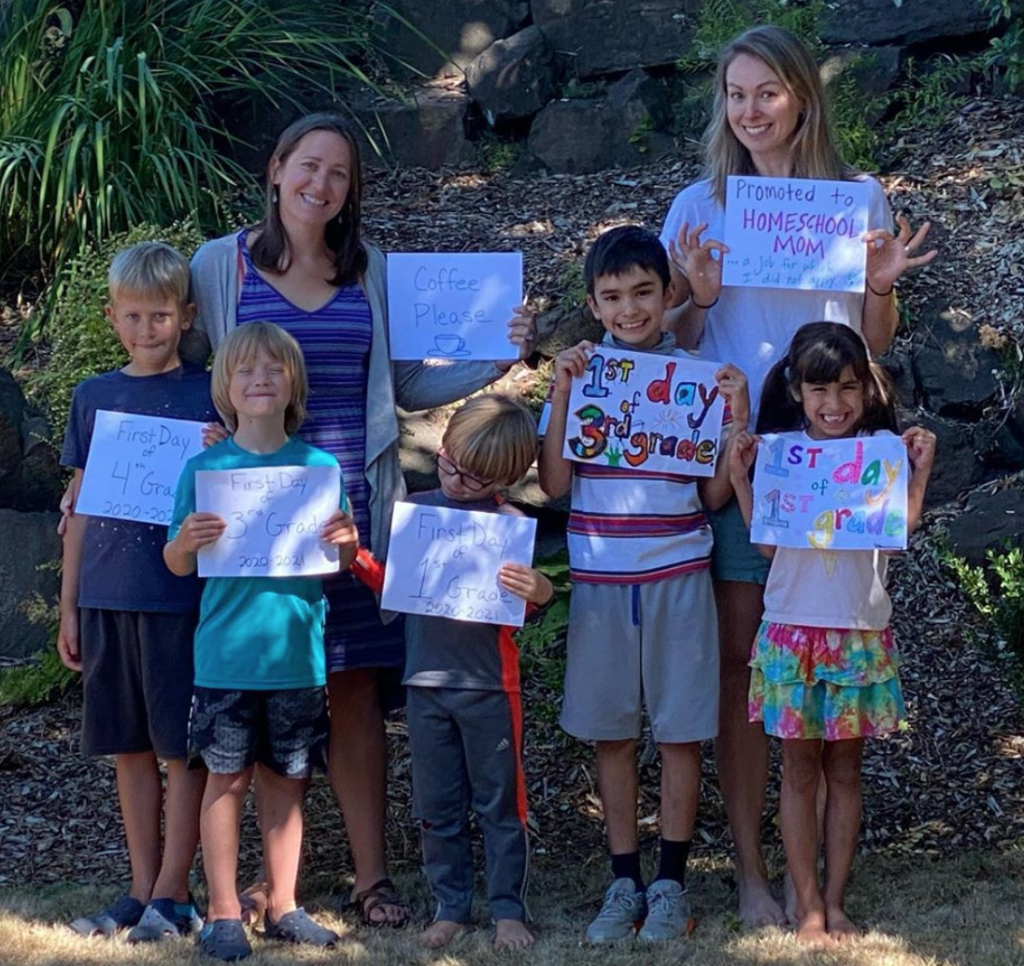
Everyone else in the house was fully focused on getting started with school.  We made the decision over the summer to home school our kids with all the Covid uncertainty.   My wife took the lead on this and has formed a pod with our good friends and neighbors who have 3 kids around the same age as ours.  So she was fully occupied while I was left with no remaining excuses – I need to figure out whats next. 

Orca home school in full effect

One thing my coach Ravi had asked me when we started to work together was to think about what a great life looks like.   I’ve thought about this over the past few months and I think it boils down to this for me:

  • First, deep connections to my family and friends.  I’m grateful to say I’ve got this. 
  • Second, a healthy mind and body.  So far so good there. 
  • Third, work that I enjoy and that is personally meaningful to me. 

Oh, and I need to make enough money to support our current lifestyle.  And save for retirement.

I know what you’re thinking: no shit sherlock, everybody wants those things.  Easy to say, not so easy to do. 

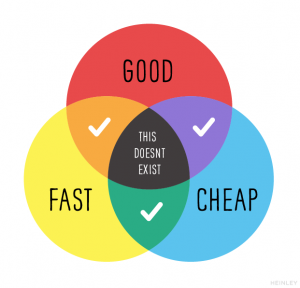
This reminds me of that famous law of software development: A project can be High Quality, Low Cost or Done Fast.  You get to choose 2 out of 3.  What will it take to achieve everything?   Will I need to break some laws?

Good, Fast, Cheap, Pick 2. | Stitches in Time

Finding meaning in my past

I’ve been reflecting back on examples of times when I felt fully alive or there was meaning in what I was doing. 

Creating this podcast has been a great recent example.   I felt deeply engaged in the process of crafting them which felt equal parts creative and cathartic.   The response I got from the first episode was quite overwhelming. Hundreds of people commented on the initial facebook post describing it as “courageous” and  “admirable”.  I don’t think there’s anything courageous about it – I was just describing how I felt and it’s interesting that people find that to be so unusual. 

Many people private messaged me about it including complete strangers.  Several people asked to meet so they could learn more about my rationale, share their own situation and ask for advice.  I felt ill equipped to give them advice since I haven’t figured anything out yet. 

However, for the first time in probably a year, I jumped out of bed in the morning to check the listener numbers, excited to work on the next episode.  Thanks to all of you who continue to bug me to publish new episodes – they’re coming, people. 

The only result when I typed “jump out of bed” on my google photos

Looking farther back, there are a few other examples of times in my life where I felt truly alive: 

One time was when I volunteered at a school in a Nepali village teaching English and Computer Science classes.  Over the course of two weeks, we helped our students create a documentary about life in Nepal to help raise awareness for the volunteer program.  It was such a fulfilling experience.  We got to be creative devising interesting lesson plans while filming the documentary.  We felt good about helping people who had so little but that were so grateful for our efforts.  Checkout Volunteer’s Initiative Nepal for more info.

Another time was leading a product design workshop at Microsoft with low income middle school kids in the Seattle area.  That was fulfilling because I got to use my expertise to support a group of motivated and enthusiastic kids.  Checkout the DigiGirlz workshop.

Another time was my first year working at Upwork which was a bay area startup connecting US clients to freelancers around the world.  There I got to observe the kind of transformation that is possible when people in developing countries getting access to opportunities they wouldn’t otherwise. 

Another time was the thrill and terror of launching a brand new service at Amazon, which is kind of like watching a baby get born: its really messy, you don’t know if you’re going to make it but no matter what happens, you’re know you’re going to love it. 

Finally, my friends and I used to traipse around Seattle creating music videos for birthday milestones.  Those moments of goofing around with close friends while being creative together were some of the best memories of my life. 

There are a few themes that emerge from these experiences:  First, there’s a theme around creating a tangible output whether that’s a software product, a video or a podcast.  Second, there is a theme around teaching or mentorship as a way to have a positive impact on people around me.  Third, there’s a theme about working with people rather than in isolation – I know my best ideas come when I’m brainstorming with others rather than an office by myself.  Finally, there’s a theme around wanting to operate within a realm where I can be an expert at what I’m doing. 

So how do I find a job that has all of these elements in it?  

Like it so far? Subscribe here

Friends who’ve transitioned

One thing my coach suggested I do doing this period is to seek out people who have made transitions in their own lives, or are doing what I want to do so I can learn from them.

Over the past month I’ve probably talked to more friends and colleagues from my past than I have in the last 5 years.  Which is a bit of a sad statement  – why did it take a life crisis to re-engage with all these people from my past? 

I spoke to my friend John, who quit his job as an engineering manager at Microsoft after 10 years to become a high school physics teacher.  He explained to me why he decided to leave, which was a combination of seeking a lower stress life, more family time and more connection to impact.  He talked about how the impact he has on the trajectory of his student’s lives – many who are first generation immigrants.  His impact has been more significant on them than any of his time in tech.

Don’t worry, John will save public education

I spoke to Josh, who is a high school friend of my wife’s.  He reached out to me after I posted the podcast about similar feelings he was experiencing around lack of satisfaction in his work despite financial successes.  A discussion with his 10 year old daughter Isla prompted a recent career shift for him.  Take a listen.

I spoke to my friend Steph, who I worked with many years ago at Microsoft.  Recently, shes been taking time between jobs to figure out what’s next.  She has been helping one of her college friends who owns a nail salon, figure out how to pivot her business in a post-Covid world.  She told me that helping her friend in such a direct way has brought them so much closer together than they were previously.  She also told me that she talks to her mom and grandma much more frequently than she did when she was working and that this extra time has also brought them closer together.  If our connections with loved ones are what ultimately bring us happiness, why do so many of us have to leave our jobs to truly invest in those relationships? 

What makes my friends come alive?

I’ve talked to various friends about what brings them alive. An investor friend of mine said he gets a thrill out of defending an investment proposal through hard questions from partners.  Another friend talked about belting out a song that exemplifies a moment or emotion she’s feeling. My coach told me he loves being in deep conversation about the human experience.  A designer friend loves doing the art she wants to do rather than the art she is paid to do.  A skier friend lives for difficult and dangerous runs he’s not sure he can do. 

While there were as many answers as people I talked to, the thing that jumped out the most was the theme of high performance in risky circumstances – whether on the stage, in the board room or the ski hill.  There was also the theme of getting lost in the moment whether that is doing a design or conversation with a client. 

Next I look at what kind of job can combine all these things I care about. 

Product managers love defining requirements

Here are the requirements of the working life I’m trying to create:

  • First, I need control over my time and ability to set my own schedule.  Previously, working in Corporate jobs I was at the mercy of the cadence and demands of the company.
  • Second, I want to work less than 6 hours a day to give me time to enjoy kids, exercise, get outdoors, etc. 
  • Third, I need to do something I’m naturally good at or can learn to be good at. 
  • Fourth, I need to find something involves helping people or solving a problem that really matters in the world
  • Finally, its got to generate 20k+ / month since Seattle is a pretty expensive place to live and my wife doesn’t work oustide the house.

It seems that starting a business of some sort would be one of the only approaches that could satisfy all these insane requirements.  So I started brainstorming ideas:

  • First ideas is to create a community of people who are looking to make their own career transition and help them do it.  This podcast has had a great reaction from my community and I am convinced there is a market need for people around my age who want are dissatisifed and looking for more in their working lives.  I could turn my own journey it into tools and resources to help them in the form of courses, manuals or coaching services.  This feels important in the world, would have a tangible output through podcasts and content and parts of it feel aligned with my abilities.  On the other hand I’ve never done anything remotely like this in my working life. 
     
  • Second, I could start a consulting business of some sort focused on PM best practices or lessons learned over the past 10 years.  I could build a community via substack, publish podcasts and videos.  The downside is that there’s already a lot of content like this out there and plenty people more qualified / accomplished than me.  The upside is that in the people out there who have my exact background and experience is… well… 1.  I think helping others in their own career would be meaningful but no idea how big the market is for this kind of content. 
     
  • Third, I could start an ecommerce businesses of some sort.  I have a few ideas for products, although, nothing that is particularly important for the world or that I feel very passionate about it. 
  • Fourth, I could try to start a software company.  I do have a couple of ideas on problems that are personally meaningful to me.  I would need to validate the problems with customers, recruit and hire a team, possibly raise money, then start the long path to finding product-market fit.  While I have worked on software products my whole working life, starting something from nothing feels terrifying and exhilarating.  Which makes it seem like the right place to start. 

Like what you read? Subscribe

Episode 3: Fun, Terror and Tears

Check out Phase 2, my podcast about quitting my job to find more fulfillment in my work life. You can find it on Spotify or Apple Podcasts. Below is a transcript of episode 3. If you haven’t heard episode 1 you may want to check that out first.

Last episode, we hit the road starting in Minnesota and travelled through the Badlands and Black Hills in South Dakota, into Grand Teton national park in Wyoming.  Along the way we encountered bikers, bears, bison and some bliss on the beaches of Jackson Lake.  This episode we’ll continue our journey through Idaho and Oregon en route to our home in Seattle WA.

So far, I haven’t told my 6 and 8 year old kids about my unhappiness at work or about quitting my job.  I’m not exactly sure why.  I tell myself it’s because I don’t want to worry them about it; kids should be thinking about baseball games and lego blocks, not financial stresses and self fulfillment.  Between griping about Covid, social distancing, and the current political situation, we’ve already put so much more on them than I had to deal with as a kid.  But I think there’s a deeper reason for not telling them; a kind of shame for not having figured it all out by now – a clear career path and my value in the world.  I have this desire to want to have figured out an actual revenue generating plan before I do tell them about it, so that when they ask the question – “Daddy, what are we going to do?” –   I can answer with certainty instead of a shrug.   

Despite me not telling them anything, they somehow pick up signals.  Listen to my 6 year old daughter Leena talking to her “boss” on the hotel telephone in Casper, Wyoming:

While it’s a pretty funny, there’s also something sad about it.  The environment parents create for their kids – conscious or not – significantly shapes them into who they’ll become.  My own parents had many anxieties about income stability, car accidents, religious persecution – that were likely formed from the trauma in their lives and led to risk aversion.  They unwittingly passed some of these anxieties onto my sister and I.  I don’t want to pass on negative feelings about work or feelings of dissatisfaction with my life onto my kids.  Being a positive model of mental health for them is perhaps the most important reason for me to hit the reset button now.

Games in Jackson

After a few days of marginally roughing it in the Tetons, we were ready for a little civilization.  We stopped in Jackson Wyoming right outside of the park to do one of my favorite activities: Lattes and pasteries on the porch of a bakery while playing cards with our kids.  Our kids are old enough to play interesting games like Hearts and be competitive.  Our 8 year old Kai in particular can crush you if you’re not careful.  Playing board and card games is one of the ways we connect with our kids.  There are many things you can learn about life through games which we’ve tried to teach our kids: taking calculated risks, strategic thinking, identifying opportunities, creating partnerships.  How luck plays a role in your circumstances and how you need to make the best of the hand you’ve been delt rather than wish you had a different hand.  And maybe.. there’s a lesson I’m currently learning about knowing when its time to find a new game when you’re losing the game you’re currently in. 

Like what you’re reading? Subscribe for new posts

Street art in Boise

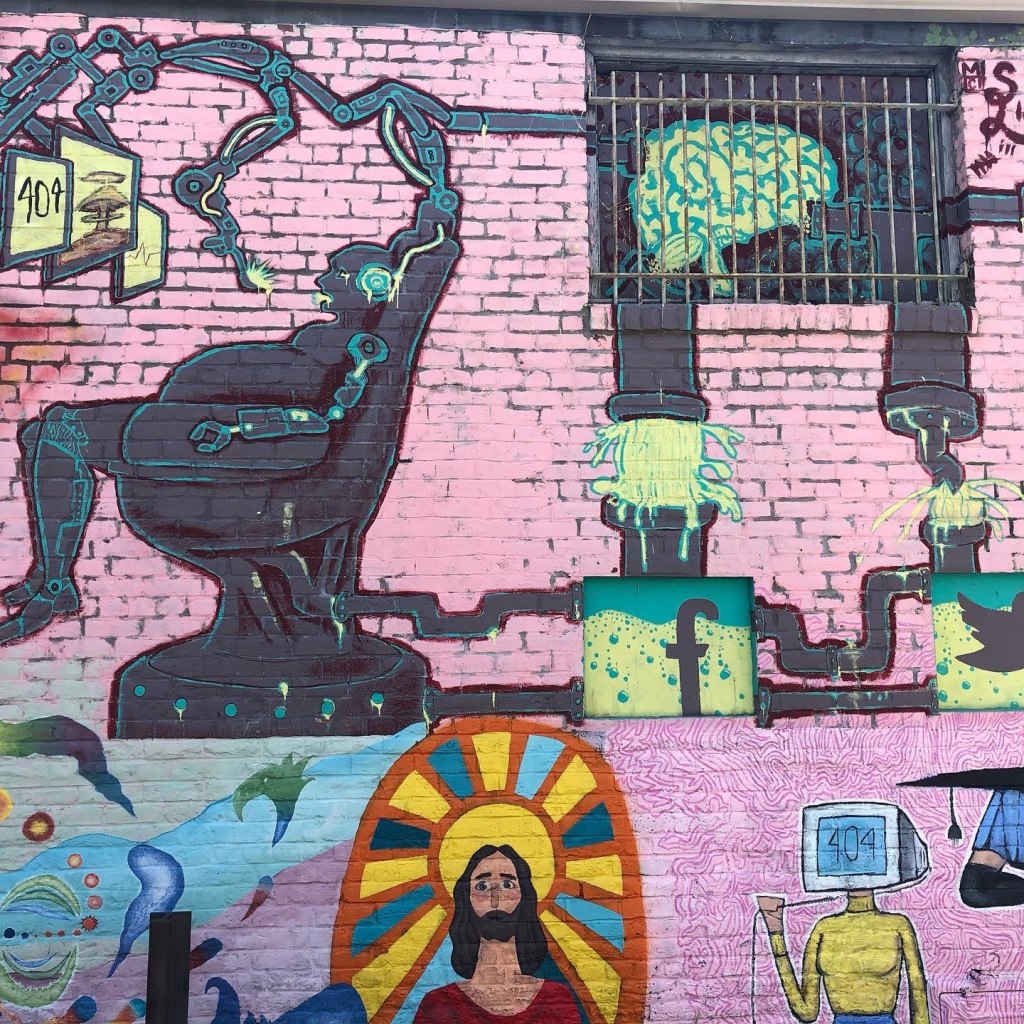
Next stop was Boise Idaho where we went to the outdoor Freak Alley Gallery which are a collection of street art murals by local artists.  Humans create meaning wherever we go to fit whatever it is we’re looking for.   The first image I noticed walking through the gallery was a man strapped to what looked like a dentist chair, staring at 3 screens displaying nuclear mushroom clouds.  Robotic arms spoon fed him sludge.  Wires connected from his brain led to factories labelled “Facebook” and “Twitter”.  Those factories  were powering the images on the screen.  That’s some heavy shit.  I think I might be the man in the chair being conditioned by the consumer industrial complex.  Or maybe I’m the complex – I did work at Facebook after all.  Or maybe this is just street art. 

Checkout more Boise street art on my Instagram:

Falling rocks on Crater Lake Oregon

Crater Lake Oregon formed when a super volcano erupted 7000 years ago and lava sealed the remaining crater.  Rain water collected over thousands of years and created the deepest lake in the US.  We hiked down 1000 feet from the crater’s edge to the lake, which was pretty intense.  There were signs every 100 feet warning us to not stop because of potential falling rocks.  Just like society tells you: keep moving on the career treadmill because if you stop to think, you could get hit by rocks like unemployment, slow career velocity, or not living up to your potential.  When you get to the lake at the bottom its beautiful, but too cold to swim in.  Turns out to be the wrong goal in the first place.  We turned around and hiked back up. 

We had a fun family canoe trip in the nearby campground down a river with a pretty strong current.  Take a listen:

This was a perfect summary of our trip so far: equal parts fun, terror and tears.

Drop baggage on the Oregon Trail

While driving through Oregon, we listened to a podcast about the pioneers who forged the Oregon trail from the mid-west.  Marcus & Narcissa Whitman were missionaries who travelled the trail on foot in March of 1836 for over 2000 miles.  We heard excerpts from Narcissa’s diary during her epic trip.  Learning about the history of a place really makes it come alive.  Our blisters from an hour long hike didn’t seem to hurt so much after hearing the Whitmans getting bit by rattlesnakes and forge rivers on their perilous journey.  They left their comfortable lives because they believed so strongly in their mission to spread the gospel; also to seek riches in some far off land. 

An excerpt from the diary that struck me:

Dear Harriet, the little trunk you gave me has come with me so far, and now I must leave it here alone…. Farewell, little trunk, I thank thee for thy faithful services, and that I have been cheered by thy presence so long. The hills are so steep and rocky that husband thought it best to lighten the wagon as much as possible and take nothing but the wheels. It would have been better for me not to have attempted to bring any baggage whatsoever, only what was necessary to use on the way.  The custom of the country is to possess nothing, and then you will lose nothing while traveling. Farewell for the present.

Diary of Narcissa Whitman, 1836

When you’re on a journey to a new place, sometimes the baggage from your old life weighs you down.  I need to embark on this trip with a fresh perspective and empty carriage – if I hope to get to a place I’ve never been.  I leave you now with the sounds of the end of the Oregon trail: climbing the  sand dues down to the majestic shores of the pacific ocean.  Enjoy. 

Like what you read? Subscribe for new posts

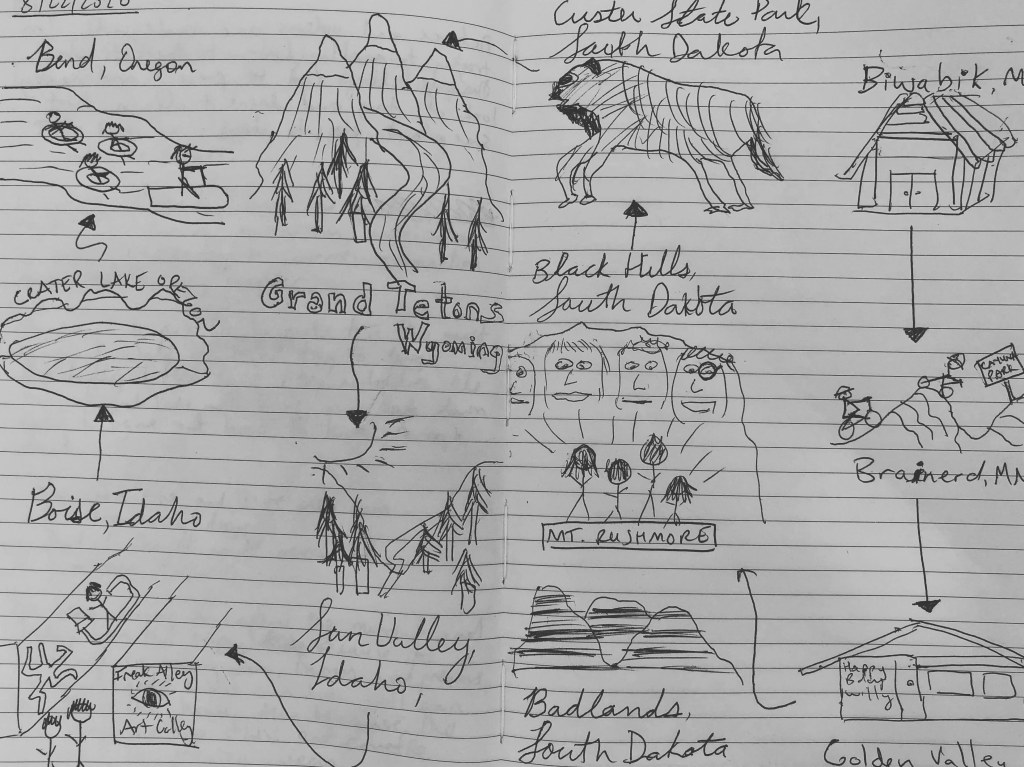
P.S. Here’s this artist’s rendition of our trip:

Episode 2: On the road

Check out Phase 2, my podcast about quitting my job to find more fulfillment in my work life. You can find it on Spotify or Apple Podcasts. Below is episode 2. If you haven’t heard episode 1 you may want to check that out first.

They silently emerge from the pine forests without warning.  First we see two or three of them in the distance and suddenly an entire heard of them are upon us – at least a hundred Bison.  Babies are fed by their mommas.  Big bulls eye each other wearily.  Most are in pursuit of the lush grass surrounding the highway.  All the vehicles along the road – probably about 50 – are stopped in both directions.  First we stopped to look at them, and now we’re completely surrounded by them; both lanes of the highway are blocked.  A 2000 pound male brushes up against our minivan and my initial confidence in our safety erodes slightly.  So far they’ve ignore us completely; or maybe they’re just unimpressed with us.  My wife inches us forward as the beasts give her space, but its slow going.  I vaguely hear my 8 year old spouting facts about Bison population in the US in the 1800s.  I’m more interested in soaking in this rare experience to commune with the natural world. He snaps me back to the real world when he says “Daddy, I need to go pee”.

I’m Samir Lakhani and this is Phase 2,, a podcast about quitting my job in corporate America to find more fulfilling work.  At the end of the last episode, I had quit my corporate job in the middle of the pandemic and embarked on a cross-country road trip with my wife and two young kids starting in Minnesota and head to our home in Seattle.  That scene with the Bison was from Custer State Park in South Dakota, which was about 3 days into our trip.  It was one of many surreal experiences in our month of travel that are still vivid memories. 

This trip was the physical manifestation of what I needed in my life – to break away from the shackles of the life I had created for myself: one of mortgage payments, responsibilities, in the rat race punching the clock 8 to 6pm every day.  I felt half present with my kids in the evenings and weekends because my mind was busily planning and obsessing for upcoming quarterly reviews  .  This trip was the open road, full of possibilities with no responsibilities except to ourselves.

We didn’t have a particular timeline for the trip.  We had a rough plan to visit parks in South Dakota, Wyoming, Idaho and Oregon with some possible camping along the way.   While my wife Amy had been to some sites in there as a child, it was mostly new to me and our kids. 

Bikers in the Black Hills

Our first destination was Badlands National Park, which is a desert climate full of otherworldly rock formations, dinosaur bone discoveries and the famous Wall Drug.  We encountered our first group of bikers here, who would be our constant companions for the rest of our time in South Dakota.  We saw thousands of them on the highway and the rest stops along the way.  They were there for the Sturgis Motorcycle rally, an annual event held in the Black Hills of South Dakota.  Typically the event attracts 500 thousand people and at least half that many were expect this year despite Covid. 

Most of the bikers fit a particular mould: late 50s, rough looking, tattoos, leather jackets, american flag patches, few helmets.  Trump stickers.  Not a covid mask to be found.  No social distancing.  I remember standing in line at a camp grocery story in a line of 15 leather clad bikers without masks all holding cases of beer and liquor.  And then there was me, the skinny brown kid in a golf shirt wearing a covid mask trying to buy two kombuchas.  I did not fit in.

At our hotel in the Black Hills, I overheard a conversation between a group of bikers on the porch.  This was an older group – maybe early 60s.   They were talking about and exchanging photos of their kids, talking about their jobs, their trips to different rallies in past years.   Their frustration with politics. Reminicing the good old days.  The stresses of their lives.   Many of them had come from long distances – North Carolina, Tenessee, Mississipi.

The trip to Sturgis was a temporary escape from their lives, doing what they love.  In many ways they were on a similar journey to me.  Seeking the freedom and possibility of the open road  was important enough to them to risk their health in a pandemic.  

Needles Highway

That was us squeaking through the Needles tunnel in the Black Hills.  It’s a tunnel blasted in the rock which is 8 feet wide and 12 feet high allowing one way traffic only.  The path on both sides has perrilous hundred foot drop-offs and is mostly winding switchbacks hugging the rockface.  There are spectacular rock formations and valley vistas along the route.  My wife Amy was navigated us through that section flawlessly but it was pretty stressful.  We all gave her support along the way which I think helped, but ultimately, her success was up to her.  Is that what I’m trying to do in my life now?  Thread the needle from my old world to a new world – with perilous hazards along the way.  People can support me, but ultimately, it’ll be up to me to make things happen. 

Like what you’re reading? Enter your email to be notified of new episodes.

Grand Tetons

The Teton mountain range springs up almost out of nowhere as you approach Grand Teton National park.  There are no foothills – just a vast plain and then three 13000 foot peaks jutting out the valley floor.  The scenery is a welcome respite after miles of flat deserty landscape.  We stayed at a cabins on the north edge of the park.  Despite covid, the campground seemed mostly occupied, although people were social distancing and masked up – park ranger enforced. 

I woke in the Tetons to sub 50 degree temperatures, the coldest we’d experienced in months.  I pulled on a sweater and step outside to sit on our porch.  The sun rise peaked out from behind the mountains in a spectacular display of reds and yellows.  Light flickers through the towering pines needles onto the porch floor as a light breeze passes.  I sip from a steaming cup of coffee with my journal open.  What can I do to bring this moment of morning peace back to my life in Seattle in some small way?  Instead of writing, I start sketching the scene in front of me in an effort to capture the moment.  Or maybe as a way to explore my feelings in a new way. 

A piece of advice I got from my coach Ravi for this period was to try things I hadn’t done before and listen for what brings me a feeling of aliveness.  Back in Minnesota, my father in law took us fishing and we probably caught 20 fish over several weeks.  He took me trap shooting at the local range – I hadn’t shot a shotgun before.  Its harder than it looks and it was a ton of fun.  My brother in law took us single track mountain biking at Cayuna state park.  This was incredibly fun and definitely brough aliveness – probably because you’re always feeling like you’re about to no longer be alive.  You need to focus 100% of mental faculties on the path with no time to contemplate the meaning of it all – unless you want a broken collerbone.  My 8 year old and I emerged unscathed and liked it so much that we rented and road at multiple points during our trip.  Thank you Matt and William for being great teachers.

One morning in the Tetons, I tried something else new: to write some poetry on my morning walk.  Hopefully the majesty of nature would permeate my soul and express itself through me.  Wow, saying that aloud makes me sound like a complete douche bag. Well here’s what I came up with:

Only I know

What it looks from my eyes

What it tastes like in my mouth

What it feels like in my heart

Only I know who I am

Do I even know?

I did not write any more poetry after that.

We did several hikes in the Tetons and our 6 year old Leena showed amazing toughness completing a hike after scraping her knee.  We came uncomfortably to a Black bear on a hike along Jenny lake.  The rangers alerted us to the bear as we were passing and they attempted to move the bear away from humans by quote “poking it with a stick”.  This is apparently state of the art in bear management. 

One afternoon we swam in the frigid but pristine waters of Jackson Lake with the backdrop of a spectacular sunset over the mountains.   Amy and I had a tender moment floating in an embrace while the kids made castles on the beach.  At that moment, holding her and watching these vibrant and playful beings we had created together I had everything I’ve ever wanted in my life.  Having this focused time with them has been a true blessing.  Connection time with my family has to be part of whatever work pursuit I tackle next.  That I know for sure. 

Join me next episode where we’ll continue our journey across the American west where we’ll analyze the meaning of street art in Boise, take a stressful canoe trip near Crater Lake and explore Dune City, Oregon as we head back to Seattle. 

Like what you’re reading? Enter your email to be notified of new episodes.

Episode 1: I quit my job. Now what?

Check out Phase 2, my podcast about quitting my job to find more fulfillment in my work life. You can find it on Spotify or Apple Podcasts. Below is a transcript of episode 1.

The feeling starts on Sunday afternoon.  As the evening approaches, the weekend euphoria wanes, replaced with the mild dread of another work week ahead.  You wake up on Monday and find yourself pretending you’re not up as a way to delay the start of the week. You drag yourself out of bed, into the shower.  Opening your laptop seems impossible.  You call into the first Zoom and put on a reasonably enthusiastic face because you’re supposed to bring energy to the team.  But it’s not working.  Something’s got to change.

Hi, I’m Samir Lakhani and that was me, a few months ago in my last week of work in the corporate world.  I couldn’t keep up the facade any longer so I made the decision to quit my comfortable job without a plan for the future.  This is Phase 2: a podcast about my experience trying to leave the corporate world halfway through my career, to figure out what I’m going to do in my next phase of my life.  I’m inviting you on my journey to find a fulfilling work life through self-examination, meeting people who have found what they love and as I try my hand launching a new business.  I’m recording it as I go – so this could all crash and burn. 

First a little about me.  I currently live in Seattle, Washington but grew up in Toronto Canada.  I went to school at the University of Waterloo and I’ve been a product manager most of my career at various tech companies for the past 15 years.  I started at Microsoft, then worked at Upwork, Amazon, Facebook and most recently, Convoy which is a start-up in the trucking space. 

If I died now, my career obituary would probably say “He checked all the boxes”.  Since my parents are from India and East Africa, I basically had 3 options to major in university: doctor, doctor and doctor.  Engineer is a reasonable fourth place and my parents were super excited when I got a job at Microsoft graduating from college.  Sometimes it feels like the immigrant mentality is that you’re always one step away from living on the streets, which, when you’re in India or E. Africa in the 70s was maybe not that far from the truth. 

I’ve worked at big companies and mid-sized startups on many types of products like consumer delivery apps, video engagement and marketplaces.  I’m grateful to have worked with some amazingly talented people, launched some successful products as well as some flops.  I’ve been an individual contributor and managed teams of product managers and designers. 

Why I quit

When I was a kid, I distinctly remember knowing that I was going to change the world.  The feeling has slowly faded over the years as I became comfortable with a modest income working on products I’m moderately enthusiastic about so that I could retire comfortably.  I’ve done OK in my career but nothing world changing.  What happened to that kid who was so certain about his future impact? 

That’s not to say that I’m totally unhappy.  I have a wonderful relationship with my wife and two kids, and supportive friends and family.  But there is definitely something missing in my work life. 

Convoy is a fantastic company with incredible people who are passionate about transforming the trucking space.  But if I’m honest with myself, I was just not that excited about what I was doing, which hurt the quality of my work and overall happiness.  In fact, even if I look farther back to past employers, its difficult to find projects that truly felt meaningful to me. 

So, what am I actually passionate about?  I’m not sure.  So I quit work to try and find that out. 

Like it so far? Sign-up to be notified of new episodes.

Cue the anxiety

Quitting your job in the middle of a global pandemic seems crazy.  It also doesn’t help that American society seems to be unraveling in the lead up to the national election.  Also, my wife stays home with our kids so we have zero income and have mortgage payments to make.  Saying this out loud is giving me heart palpitations.

The mental anxiety around not having a job – for the first time in 15 years – was one of the reasons it took me so long to make this decision.  I agonized over all the possible scenarios: what if we’re in a deep depression and I’ll never get hired again?  What if we have major health issues and can’t afford health insurance?  Will my parents and in-laws think I’m a loser?  What if our kids don’t go back to school in the fall?   Having two young kids raises the stakes.

To combat my financial anxieties, I created a spreadsheet to figure out exactly how much runway we had financially. How much does health insurance cost?  Where could we cut some costs?   Thankfully, we have saved some money during my past 15 years of working that give us a cushion for a little time. 

I  questioned my decision to quit up until the moment of giving notice to my boss.  The relief I felt immediately after telling him was all the confirmation I needed that this was the right decision for me. 

Coaching

So I needed to figure out what to do next.    To help me with this transition, I decided to work with a professional coach.  One thing I know about myself is that I make better decisions when I work with people rather than in isolation.  I can get trapped in analysis paralysis and sometimes miss the simpler path.  I like bouncing ideas off of someone and have them challenge my assumptions. 

I met Ravi Raman 7 years ago through a mutual friend, and we lost touch after that.  I happened to be on LinkedIn and saw that he had transitioned from leading teams at Microsoft into coaching full time.  His similar background in tech and our personal connection made him seem like a good fit. 

I came prepared to our first coaching call with a list of my perceived strengths, weaknesses, types of careers I might find interested and a 10 point plan on how to achieve my goal of “career fulfillment”.  I tried to apply my typical approach from work: bring overwhelming data, logic and frameworks to every decision.

His first piece of advice to me was to chill the fuck out, put away the bullet point plans and let my brain settle for a few weeks.  He thought I needed to clear my head so I could get into a calm mental space which would bring insight into the right next step for me.   He suggested that we take a trip, spend time with family, be outdoors and have fun.  I should avoid thinking about what I’m going to do next in my career, planning out activities and just… live.  He also suggested that I keep a written journal to regularly record my observations and feelings along the way, particularly moments when I feel alive doing whatever activity I’m doing. 

It took a lot of effort to actually followed his advice.  I felt lost at the start without a schedule and list of tasks to accomplish.  I had monkey-mind and found myself making a daily of tasks in my head which I could check-off:  Wakeup, exercise, smoothie, journal, go fishing, find new book, read book, have lunch, research mountain bikes, etc etc.  Over time, I started dropping the agenda and just did what felt right without a particular aim.  If I felt like going for a walk, I did that.  If I felt like reading a book, I did that.  I was without an agenda for the first time in my life and it was incredibly freeing. 

The journal was also pretty helpful.  Ravi insisted I write it in prose rather than bullet points on my laptop because he believed the act of physical writing allowed inner thoughts to flow better than typing.   I was skeptical of this at first.   I found myself repeatedly staring at a blank page with nothing to say and then, after 5-10 minutes, suddenly experience an eruption of insights and observations from yesterday.  I’d write about how I was feeling, observations about the world, my kids, my wife and what I found brought my energy or took away energy. 

At this time we were in Minnesota visiting my wife’s family and had decided to road trip back to Seattle.  This felt like the perfect trip to help clear my head and just live.  So in a few days, we packed up all our stuff and hit the open road with a rough plan to visit national parks and sites across the American west.  In the middle of a global pandemic.  With two kids.  

Tune in next episode to find out how it went. 

Like what you read? Sign-up to be notified of new episodes.